Acupuncture is an ancient form of medicine that has been used by the Chinese and many Asian cultures for over 2000 years. It is used as a therapeutic form of healing from disease and restores balance and equilibrium in the body.
Acupuncture is based on meridians that balance and control the flow of energy/chi in your body. This energy/chi flows up and down the body like electrical circuits and we call these energetic circuits ‘channels’ or ‘meridians’. There are twelve of these channels and they circulate energy and blood throughout the body. They follow a pathway and we use points along this pathway to change the energy in a particular channel. We might increase it, decrease it or transfer this energy to another channel depending on your symptoms and our analyses of you.
A simplified explanation of Chinese medicine is the theory of maintaining balance. Pain and illness can occur when these meridians become unbalanced or blocked and energy can no longer flow freely. Blockages can occur for many reasons such as injury, emotional shocks, trauma, bad diet, hormonal imbalances, insomnia and stress for example. Painless needles are used on the body to help heal and restore balance.
Sometimes we detect an energetic imbalance in an organ such as the Liver and we like to ‘clean it out’. This would involve dispersing all the incorrect energy out of the liver and then sending correct energy back into it. This energetic imbalance may have occurred in the liver because of large use of antihistamines or pharmaceuticals, heavy use of alcohol or drugs or strong hormonal surges that the liver is processing. In Chinese medicine, the liver is also an organ that stores all unprocessed emotions so if you are prone to burying emotions deep in the body, they often end up in the liver. It results in the liver not being able to function correctly, directly impacting other systems and organs.
What to expect in an acupuncture treatment?
Your acupuncturist will find out about your health from a holistic point of view, covering your personal wellness history, your digestion, sleep, stress response, your hormonal system and general health. The first time you come in for an acupuncture appointment a lot of time will be spent gathering all the information needed to make a thorough and complete assessment of you and what your body needs to heal.
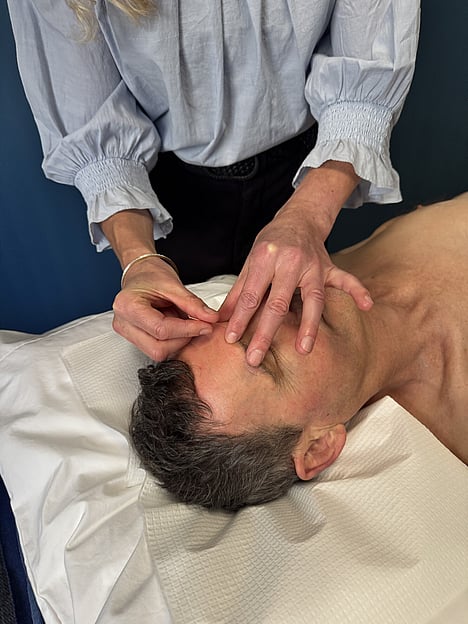
The assessment will also include palpation of certain points on your body to ascertain sensitivity and possible blockages in the channels. An abdominal palpation will be conducted to further assess the energetic balance in your body. Your pulse will be taken and your tongue analysed. All these examinations provide crucial information to be able to make a complete assessment of you and your health.
All of this information will then be analysed, a diagnoses will be determined and your course of treatment planned. Often it will take many sessions to unblock channels and get the energy moving correctly in your body to bring your body to a correct state of equilibrium. Your treatment may consist of several therapies in conjunction with acupuncture, such as fire cupping, infrared light therapy, ear acupuncture and MFR (Myofascial Release Therapy). You might need to be referred to another therapist for additional supportive treatment such as an osteopath or a nutritionist.
Will the needles hurt?
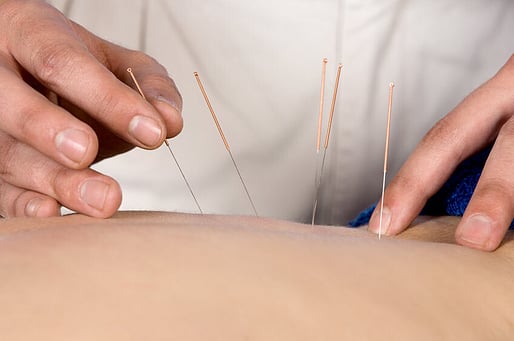
Once the correct treatment has been determined depending on your symptoms, the needles will be inserted gently into the body. Most needles are only inserted to a depth of 2-3mm. The needles will be left in place for 25- 30 mins and heat is often applied to certain needles to amplify the energetic change the therapist is hoping to achieve. Often, people go into a state of deep relaxation, and many may drift off to sleep.
The needles are not meant to feel painful after they have been inserted. Initially you might feel a sharp pain like a bee-sting, but that pain should subside and if it doesn’t, you let your therapist know immediately. A continuing sharp pain would be detrimental to the treatment. The practitioners goal is to get you into a deep state of relaxation, allowing the parasympathetic system to help the body heal and restore.
The goal of inserting the needle is to stimulate the energy at certain acupuncture points along the channel and achieve De Qi. De Qi, which literally means “the arrival of vital energy,” is considered essential for clinical effect. For the client, the sensation of De Qi is often described as an aching, soreness, numbness, tingling or heaviness. The practitioner can also feel the arrival of energy, with a phenomenon known as the “needle grab”. The quality is described as a similar to a fish biting the end of a fishing line. The practitioner feels the needle fix in the body tissue with a tense, tight or full sensation.
What is acupuncture good at treating?
Acupuncture is widely known for its effectiveness in treating musculoskeletal injuries but has traditionally been used extensively in treating many other conditions such as:
Stress and anxiety
Insomnia
Headaches and migraines
Injury and Pain
Hormonal imbalances (PCOS, endometriosis, perimenopause etc)
Fertility issues (both male and female)
Pregnancy and post natal support
General Wellbeing, immune support. Recovery post chronic illness.
How does Classical and TCM acupuncture differ from dry needling?
People often ask what the difference is between Classical and TCM (Traditional Chinese medicine) acupuncture, Western acupuncture and dry needling. Although they all use fine needles, the training, background and scope of practice of each are very different.
Classical and TCM Chinese Acupuncture
This is the origin of all acupuncture, one of the oldest medicine in the world, developed over thousands of years. In NZ it requires a 3-4 year degree.
Classical and TCM acupuncture takes a comprehensive, whole-body approach, working with the traditional Chinese concept of health. It can support everything from pain, injuries and rehabilitation to sleep, digestion, fertility, hormones, immunity and mental wellbeing.
Western Acupuncture (this is what around 6% of physios and osteopaths practice)
Based on the clinical success of TCM and classical acupuncture to fit within Western healthcare. Western acupuncture adapts needling into a biomedical model. In NZ, physiotherapists or other health professionals complete short postgraduate courses (around 150+ hours, spread over modules) alongside their regular practice. It’s most often used for pain relief and rehabilitation, with a focus on the nervous system, muscles and biomechanics.
Dry Needling (this is what around 50% of physios practice)
A newer technique, usually taught in short courses (sometimes just a weekend or two). It targets muscle “trigger points” to release tension and improve movement. This makes it useful for short-term pain or mobility issues, often as part of physio or massage treatment. Patients will often find dry needling is more uncomfortable than Classical and TCM acupuncture.
So while the needles may look the same, Classical and TCM acupuncture is the original, broad and holistic system. Western acupuncture adapts these methods into a biomedical framework, and dry needling is a focused muscle technique. Each has its place, and they are often used together in different settings.
Find out more about the author, Registered Acupuncturist Flis Pask here