Have you considered trying acupuncture, or have you tried it before? Some people are concerned about the sensation they are going to feel from the acupuncture needle. The needles that we use are the size of a human hair, and much smaller than the ancient needles used in China. Changing the word needle to “filament” has been considered in modern-day acupuncture circles because our single-use needles are not like needles used to draw blood or give an injection; they are also not like a sewing needle or even a pin. These needles are incredibly fine; a commonly used size is .25 mm.
When administering acupuncture, the practitioner is attempting to draw chi, similar to the Maori concept of mana, to a specific area on the body. Empirical points are scientifically researched to treat specific conditions, like points for high blood pressure or diabetes. Each point is on a channel, or a roadway on your body, and these channels are related to organs. Many points support organ disharmonies, such as lung constraint or intestinal pain.
Organs are also related to emotions in Chinese Medicine, and points on the organ channel can treat specific emotions. Dazhong (Great Bell) point, Kidney 4, near the ankle, can treat fear. The channels pass through muscle and tendon areas, and can be used to alleviate pain by spreading out stuck energy or nourishing weak energy.
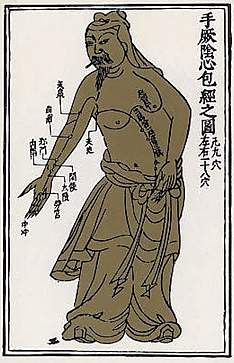
When the needle is inserted, there may be a tiny prick sensation or a brief achy sensation, which is called “Da qi” sensation. The prick sensation is more likely to happen on sensitive areas like the face, feet, ears, and hands. The ache sensation often happens in muscular areas, or particular points that have been used for thousands of years to move qi strongly, like between the web of the big toe and second toe, or the index finger and thumb.
If you want to avoid a strong sensation point, we can discuss that during your treatment. You might find that surrendering to a single, quick moment of sensation is worth experiencing enhanced pain relief or a more deeply relaxing session. Or, we can use a Japanese technique in which the needle is placed at the most superficial level possible, using the thinnest .16 mm needle . This technique beckons the qi to come to it instead of grasping the qi with the needle. You might want to experiment with discovering what level of sensation gives you the best results. Your comfort is important for the treatment to be effective.
Feng Y, Fang Y, Wang Y, Hao Y. Acupoint Therapy on Diabetes Mellitus and Its Common Chronic Complications: A Review of Its Mechanisms. Biomed Res Int. 2018 Oct 22;2018:3128378. doi: 10.1155/2018/3128378. PMID: 30426006; PMCID: PMC6217896.
Sudhakaran P. Acupuncture for Hypertension Using Traditional Chinese Medicine Concepts. Med Acupunct. 2021 Feb 1;33(1):15-21. doi: 10.1089/acu.2020.1422. Epub 2021 Feb 16. PMID: 33613809; PMCID: PMC7894028.
Peter Deadman & Mazin Al-Khafaji with Kevin Baker, A Manual of Acupuncture, England: Journal of Chinese Medicine Publication, 1998, 342.
Nishiwaki M, Takayama M, Yajima H, Nasu M, Park J, Kong J, Takakura N. A Double-Blind Study on Acupuncture Sensations with Japanese Style of Acupuncture: Comparison between Penetrating and Placebo Needles. Evid Based Complement Alternat Med. 2018 Apr 24;2018:8128147. doi: 10.1155/2018/8128147. PMID: 29849728; PMCID: PMC5941723.

To find out more about Amy, Click here.