
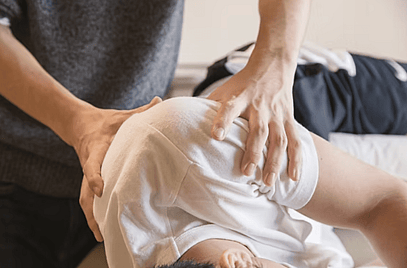
A dislocation happens when the bones that make up a joint are forced out of their normal place, typically due to a sudden impact or trauma. Most people know this as a joint “popping out”. This type of injury can affect any joint in the body, but is most commonly seen in the shoulders as they are typically shallow joints and have a high range of mobility. This joint displacement often results in intense pain, swelling, and loss of function, as well as damaging the surrounding ligaments, tendons, muscles, and nerves.
One of the lesser-known but important facts about dislocations is that once a joint has been dislocated, the likelihood of it happening again increases significantly. Some people who had previously had a shoulder dislocation are a risk of redislocating just through normal movements, such as brushing their hair or high-fiving someone.
This increased risk of recurrence is due to
Weakened or overstretched ligaments and soft tissues that no longer stabilise the joint effectively
Muscle imbalances or weakness following injury
Altered movement patterns or joint mechanics post-injury

Repeated dislocations lead to chronic instability, long-term joint dysfunction, and, in some cases, may require surgical intervention.
Osteopathy can play a key role in preventing re-dislocation and supporting recovery. Through a holistic approach, osteopathic treatment focuses on
Strengthening the muscles that support and stabilise the joint
Restoring normal joint mobility and function
Reducing pain and inflammation
Supporting a safe and gradual return to activity
By addressing the underlying causes of instability, osteopathy helps promote long-term joint health and resilience.
By Dr Francesca Evans Registered Osteopath
Bankart, A.S.B. (1923). RECURRENT OR HABITUAL DISLOCATION OF THE SHOULDER-JOINT. BMJ, 2(3285), pp.1132–1133. doi:https://doi.org/10.1136/bmj.2.3285.1132
De Luigi, A.J., Raum, G., King, B.W. and Bowers, R.L. (2024). Osteopathic approach to injuries of the overhead thrower’s shoulder. Journal of Osteopathic Medicine. doi:https://doi.org/10.1515/jom-2024-0031
Gaballah, A., Zeyada, M., Elgeidi, A. and Bressel, E. (2017). Six-week physical rehabilitation protocol for anterior shoulder dislocation in athletes. Journal of Exercise Rehabilitation, [online] 13(3), pp.353–358. doi:https://doi.org/10.12965/jer.1734976.488
Olds, M., Ellis, R., Donaldson, K., Parmar, P. and Kersten, P. (2015). Risk factors which predispose first-time traumatic anterior shoulder dislocations to recurrent instability in adults: a systematic review and meta-analysis. British Journal of Sports Medicine, 49(14), pp.913–922. doi:https://doi.org/10.1136/bjsports-2014-094342
Skelley, N.W., McCormick, J.J. and Smith, M.V. (2014). In-game Management of Common Joint Dislocations. Sports Health, [online] 6(3), pp.246–255. doi:https://doi.org/10.1177/1941738113499721

To find out more about author Francesca, click here.