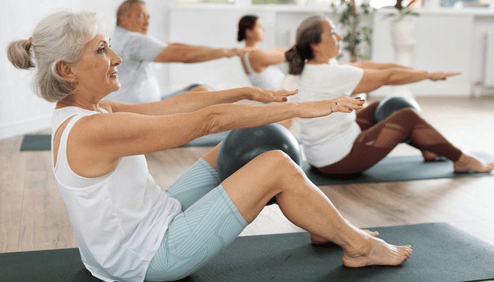
Thinking about getting back into exercise after some time away? Maybe you’ve recently joined a new yoga or Pilates class, started walking more regularly, or picked up light strength training. No matter where you're starting from, making the decision to move more is a fantastic step for your long-term health, mobility, and wellbeing.
But if you're noticing a few more aches and pains than you expected, or wondering whether your body is ready for this new level of activity, you're not alone. We see many people in our clinic who are motivated to become more active later in life, but feel uncertain: What’s safe for me now? Why does this feel harder than it used to? Will I injure myself if I push too far?
The good news is that it’s never too late to improve strength, flexibility, and confidence in your body, but how you return to exercise matters. Over the years, our bodies accumulate small changes. Old injuries, long work hours, time spent sitting, or just the natural effects of aging can all affect how we move and recover. Things that used to feel easy may now take a little more effort or warm-up. That’s completely normal, and entirely manageable with the right support.
The mistake many people make is jumping into new activities without checking in on how their body is actually functioning now. It’s easy to ignore tight hips, a grumpy knee, or stiff shoulders until they start to get in the way of your progress. That’s where osteopathy can make a real difference.
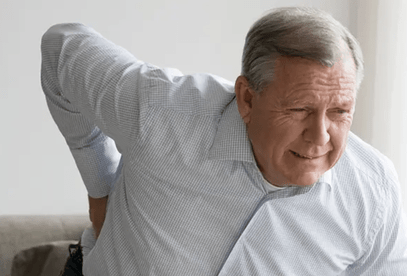
Osteopaths are trained to look at the whole picture, not just where it hurts. We assess joint mobility, muscular balance, breathing patterns, posture, and movement habits to understand what your body needs to feel and perform better.
Whether you're taking up dancing, returning to gardening, starting group fitness classes, or just aiming to feel stronger day to day, we can help make sure your body is ready, and stays ready, for what you love to do.
Through gentle hands-on treatment and practical guidance, we’ll help reduce tension, improve mobility, and support your body’s natural ability to move and recover well.
Getting active again should leave you feeling energised and empowered, not sore, stiff and frustrated. If you’re feeling hesitant about how your body will cope, or you’re already noticing tightness and fatigue after exercise, now’s the time to check in. Don’t let discomfort or doubt hold you back
By Dr Francesca Evans Registered Osteopath
André, N. and Agbangla, N.F. (2020). Are Barriers the Same Whether I Want to Start or Maintain Exercise? A Narrative Review on Healthy Older Adults. International Journal of Environmental Research and Public Health, 17(17), p.6247. doi:https://doi.org/10.3390/ijerph17176247
Dana Sullivan Killroy (2014). Exercise Plan for Seniors. [online] Healthline. Available at: https://www.healthline.com/health/everyday-fitness/senior-workouts
Gill, T.M. (2000). Role of Exercise Stress Testing and Safety Monitoring for Older Persons Starting an Exercise Program. JAMA, 284(3), p.342. doi:https://doi.org/10.1001/jama.284.3.342
NHS (2024). Physical activity guidelines for older adults. [online] NHS. Available at: https://www.nhs.uk/live-well/exercise/physical-activity-guidelines-older-adults/
Physical activity and cognitive function in older persons. (2016). Swiss Sports & Exercise Medicine, 64(2). doi:https://doi.org/10.34045/ssem/2016/8
Resnick, B. (2000). A seven step approach to starting an exercise program for older adults. Patient Education and Counseling, 39(2-3), pp.243–252. doi:https://doi.org/10.1016/s0738-3991(99)00039-7

To learn more about author Francesca click, here.